What are you looking for?
Search

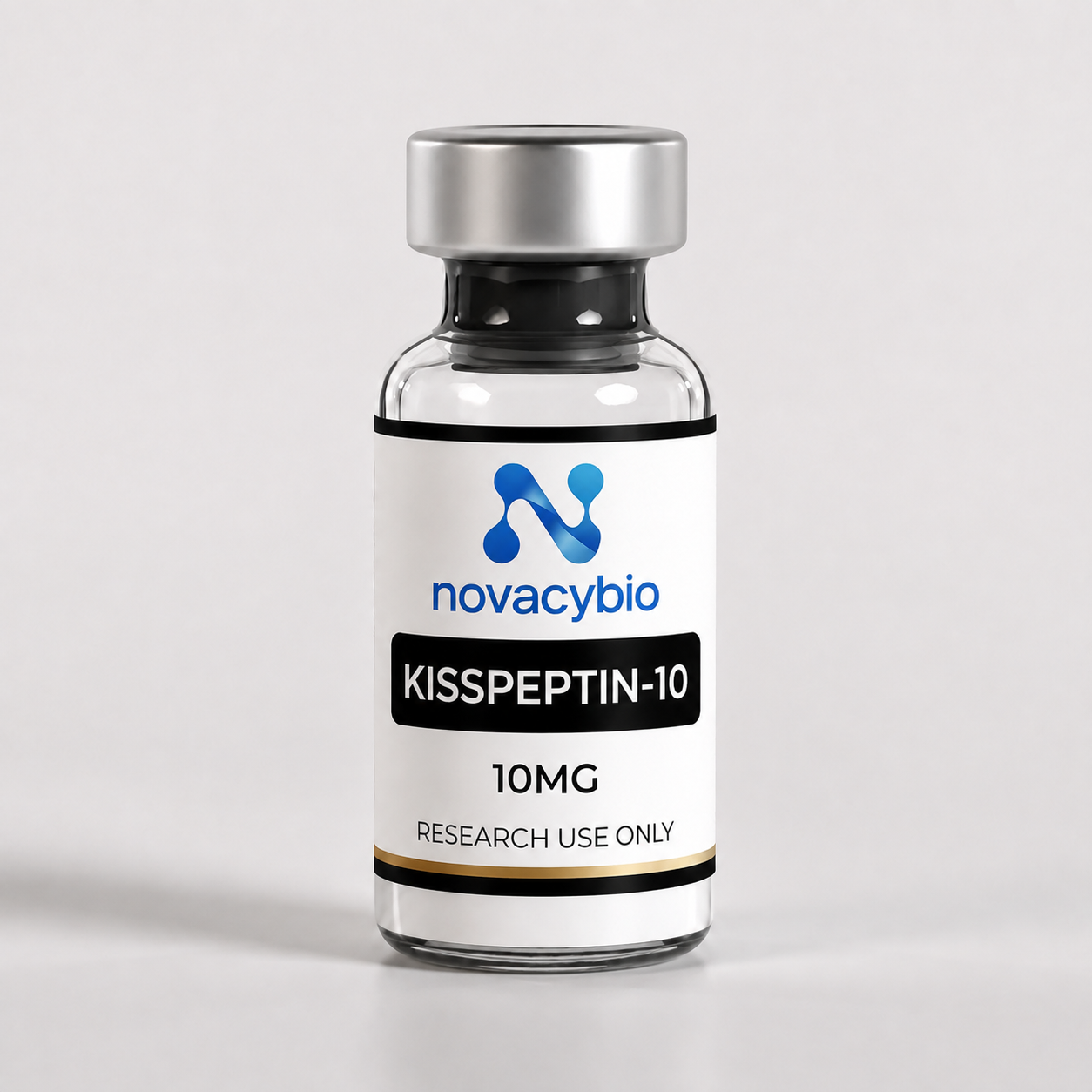
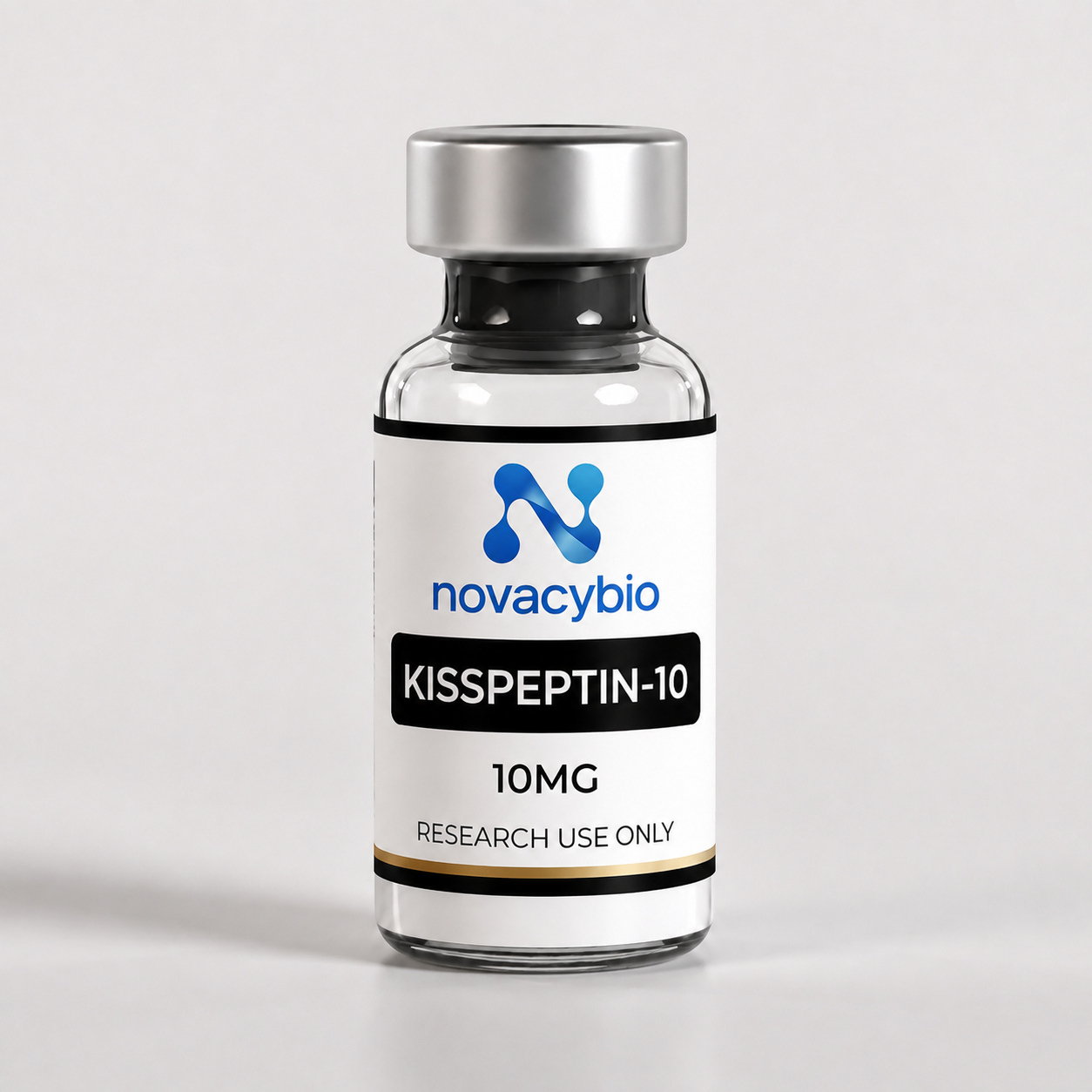
Kisspeptin-10 (KP-10)
Synthetic Decapeptide Research Reagent for KISS1R, GnRH & Neuroendocrine Signaling Studies
| Feature | Description |
|---|---|
| Product Name | Kisspeptin-10 (KP-10) Research Peptide |
| Product Format | 1 Kit (10 Vials) |
| Peptide Type | Synthetic Decapeptide Research Compound |
| Research Target | KISS1R / GPR54 Receptor Signaling |
| Research Area | Neuroendocrine & Reproductive Hormone Pathway Studies |
| Purity | ≥99% by HPLC |
| Quality Verification | HPLC Analysis, Mass Spectrometry, COA Available |
| Molecular Identity | Defined 10 Amino Acid Sequence |
| Research Applications | KISS1R binding studies, GnRH signaling research, GPCR pathway analysis |
| Storage | Lyophilized powder, store at -20°C, protect from light and moisture |
| Documentation | COA, HPLC Report, MS Verification, Batch Documentation |
| Supply Type | Professional B2B Research Peptide Supply |
| Usage Statement | For research use only. Not intended for human consumption. Not intended for clinical or diagnostic use. |

1. What is Kisspeptin-10? (Identity & Definition)
Kisspeptin-10 (KP-10) is a synthetic decapeptide fragment derived from the C-terminal active region of the endogenous Kisspeptin family of peptides encoded by the KISS1 gene.
As a biologically active fragment of Kisspeptin-54, Kisspeptin-10 retains high affinity for the Kisspeptin receptor (KISS1R, also known as GPR54) and is widely used in research investigating neuroendocrine signaling pathways, reproductive hormone regulation, and hypothalamic-pituitary-gonadal (HPG) axis mechanisms.
Kisspeptin signaling was initially identified through studies of metastasis suppression pathways and was later recognized as a critical regulatory system involved in reproductive neuroendocrinology.
Product Identity:
- Product Name: Kisspeptin-10
- Synonyms: KP-10, Metastin (45-54)
- Peptide Type: Synthetic decapeptide
- Amino Acid Length: 10 amino acids
- Molecular Weight: ~1302.45 g/mol
- Target Receptor: KISS1R / GPR54
- Research Category: Neuroendocrine signaling peptide
2. Peptide Category Positioning
Kisspeptin-10 belongs to the category of:
Neuroendocrine Regulatory Peptides
Unlike growth hormone secretagogues or metabolic peptides, Kisspeptin-10 is primarily classified as a reproductive axis signaling research peptide.
Research classification:
| Category | Description |
|---|---|
| Peptide Family | Kisspeptin peptide family |
| Biological System | Hypothalamic-pituitary-gonadal (HPG) axis |
| Primary Target | KISS1 receptor (GPR54) |
| Signaling Pathway | Kisspeptin → GnRH → LH/FSH |
| Research Field | Reproductive endocrinology |
Kisspeptin-10 is commonly investigated in studies involving:
- GnRH neuronal activation
- Gonadotropin regulation
- Neuroendocrine communication
- Reproductive physiology models
3. Research Logic & Mechanism of Action
Kisspeptin-10 research focuses on understanding how upstream hypothalamic signaling regulates reproductive hormone pathways.
The proposed signaling cascade:
Kisspeptin-10
        ↓
Activation of KISS1R / GPR54 receptor
        ↓
Hypothalamic GnRH neuron stimulation
        ↓
GnRH secretion
        ↓
Pituitary LH & FSH release
        ↓
Downstream gonadal signaling research
Kisspeptin-10 functions as a molecular tool for studying:
- KISS1R receptor activation
- G-protein coupled receptor signaling
- GnRH neuron regulation
- Hormonal feedback mechanisms
4. Research Findings
KISS1R Receptor Activation Studies
Research has demonstrated that Kisspeptin peptides interact strongly with KISS1R receptors, activating intracellular signaling pathways associated with neuroendocrine regulation.
Studies using cellular and animal models have investigated:
- KISS1R receptor binding affinity
- GPCR signaling mechanisms
- Calcium signaling responses
- Neuronal activation patterns
GnRH Regulation Research
Kisspeptin neurons are considered key regulators of GnRH neuronal activity.
Research models have explored:
- Kisspeptin-induced GnRH secretion
- Hypothalamic reproductive signaling
- Pulsatile hormone regulation
Reproductive Endocrinology Research
Human and animal research models have investigated Kisspeptin pathways in:
- Pubertal development mechanisms
- Gonadotropin regulation
- Fertility-related endocrine signaling
- Hormonal feedback systems
5. Research Applications
Kisspeptin-10 is used as a research tool in multiple scientific areas.
Primary Research Applications:
Reproductive Endocrinology Research
Investigation of:
- HPG axis regulation
- GnRH neuron function
- LH and FSH signaling pathways
Neuroendocrine Signaling Studies
Used for exploring:
- Hypothalamic peptide communication
- Neuroendocrine receptor pathways
- GPCR-mediated signaling
KISS1R / GPR54 Receptor Research
Applications include:
- Receptor binding studies
- Signal transduction analysis
- Molecular pharmacology research
Fertility and Hormone Regulation Research
Research models include:
- Gonadotropin secretion mechanisms
- Reproductive hormone networks
- Endocrine feedback pathways
6. Safety Profile
Research Safety Overview
Kisspeptin-10 is supplied as a laboratory research peptide and is not approved for human therapeutic applications.
Published research has primarily evaluated Kisspeptin signaling through controlled experimental models.
Potential research considerations include:
- Dose-dependent receptor activation
- Hormonal pathway modulation
- Experimental variability between models
Pharmacological Considerations
Research studies indicate Kisspeptin signaling may influence:
- GnRH neuronal activity
- LH/FSH secretion patterns
- Reproductive endocrine pathways
However, long-term effects, optimal experimental parameters, and clinical applications require further investigation.
7. Final Product Positioning
Professional Research Peptide for Neuroendocrine Studies
Kisspeptin-10 is positioned as a high-purity research reagent for laboratories investigating:
- KISS1/KISS1R signaling
- GnRH regulation mechanisms
- Reproductive endocrinology
- Neuroendocrine communication
It is designed for:
- Academic research institutions
- Biotechnology laboratories
- Pharmaceutical research programs
- Molecular biology studies
Not positioned as:
- Dietary supplement
- Human-use peptide
- Therapeutic product
8. Quality Documentation
Comprehensive Analytical Documentation Available
Each Kisspeptin-10 research peptide batch can be supported by analytical documentation, including:
Certificate of Analysis (COA)
Provides batch-specific information including:
- Product identification
- Batch number
- Manufacturing details
- Purity specification
- Quality testing results
HPLC Analysis Report
High-performance liquid chromatography testing confirms:
- Peptide purity profile
- Analytical separation characteristics
- Batch consistency
Typical specification:
Purity: ≥99% by HPLC
Mass Spectrometry Verification
Mass spectrometry analysis confirms:
- Expected molecular weight
- Peptide identity
- Molecular integrity
Batch Documentation
Supporting documentation may include:
- Batch records
- Quality control reports
- Manufacturing traceability information
- Analytical testing records
9. Storage Information
For optimal peptide stability:
Recommended Storage Conditions:
- Store lyophilized peptide at -20°C
- Protect from direct light exposure
- Protect from moisture
- Keep container tightly sealed
- Avoid repeated freeze-thaw cycles
After reconstitution:
- Store according to validated laboratory protocols
- Minimize exposure to temperature fluctuations
10. Research Disclaimer
For research use only.
Not intended for human consumption.
Not intended for clinical or diagnostic use.
This product is supplied exclusively as a laboratory research reagent. It is not manufactured, approved, or marketed as a pharmaceutical product, medical treatment, dietary supplement, or veterinary product.
11. Frequently Asked Questions (FAQ)
1. What is Kisspeptin-10 peptide used for in research?
Kisspeptin-10 is primarily used for studying KISS1R signaling, GnRH regulation, reproductive endocrinology, and neuroendocrine pathways.
2. What receptor does Kisspeptin-10 activate?
Kisspeptin-10 activates the Kisspeptin receptor KISS1R (GPR54), a G-protein coupled receptor involved in neuroendocrine signaling research.
3. What is the difference between Kisspeptin-10 and Kisspeptin-54?
Kisspeptin-10 is the shorter C-terminal active fragment of Kisspeptin-54 and maintains strong receptor-binding activity for KISS1R research applications.
4. What purity specifications are available for Kisspeptin-10?
Research-grade Kisspeptin-10 is commonly supplied with HPLC purity testing, molecular weight verification, and batch-specific analytical documentation.
5. How is Kisspeptin-10 analyzed for quality control?
Quality verification typically includes HPLC purity analysis, mass spectrometry identification, and Certificate of Analysis (COA) documentation.
6. What research fields use Kisspeptin-10?
Common research areas include reproductive endocrinology, neuroscience, molecular pharmacology, receptor signaling, and hormone regulation studies.
7. How should Kisspeptin-10 peptide be stored?
Lyophilized Kisspeptin-10 should typically be stored at -20°C, protected from light and moisture to maintain stability.
8. Is Kisspeptin-10 approved for human use?
No. Kisspeptin-10 is provided strictly as a research reagent.
For research use only. Not intended for human consumption. Not intended for clinical or diagnostic use.

You have successfully commented, please wait for review
Copied Successfully
You can enjoy up to 1 free gift!
