What are you looking for?
Search

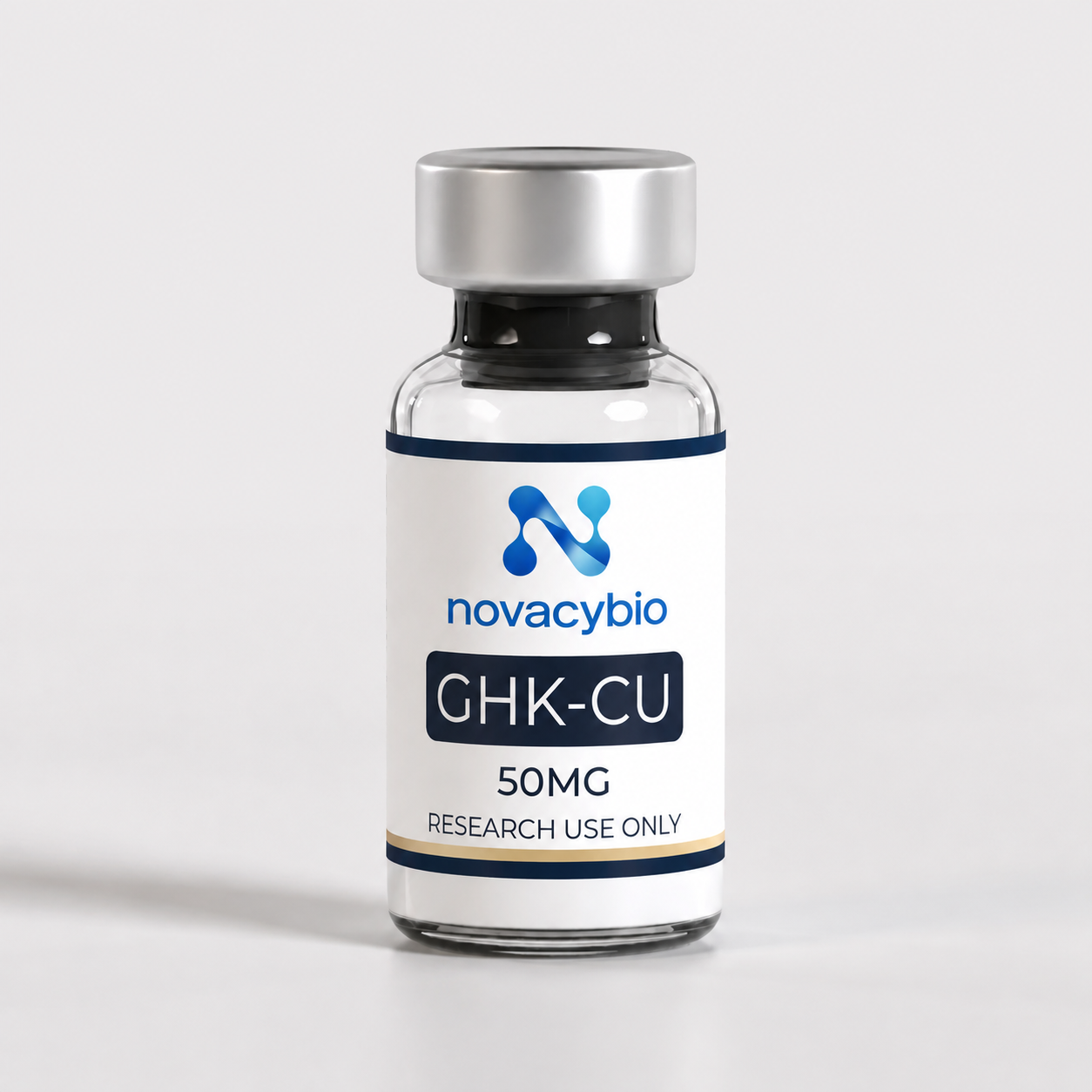
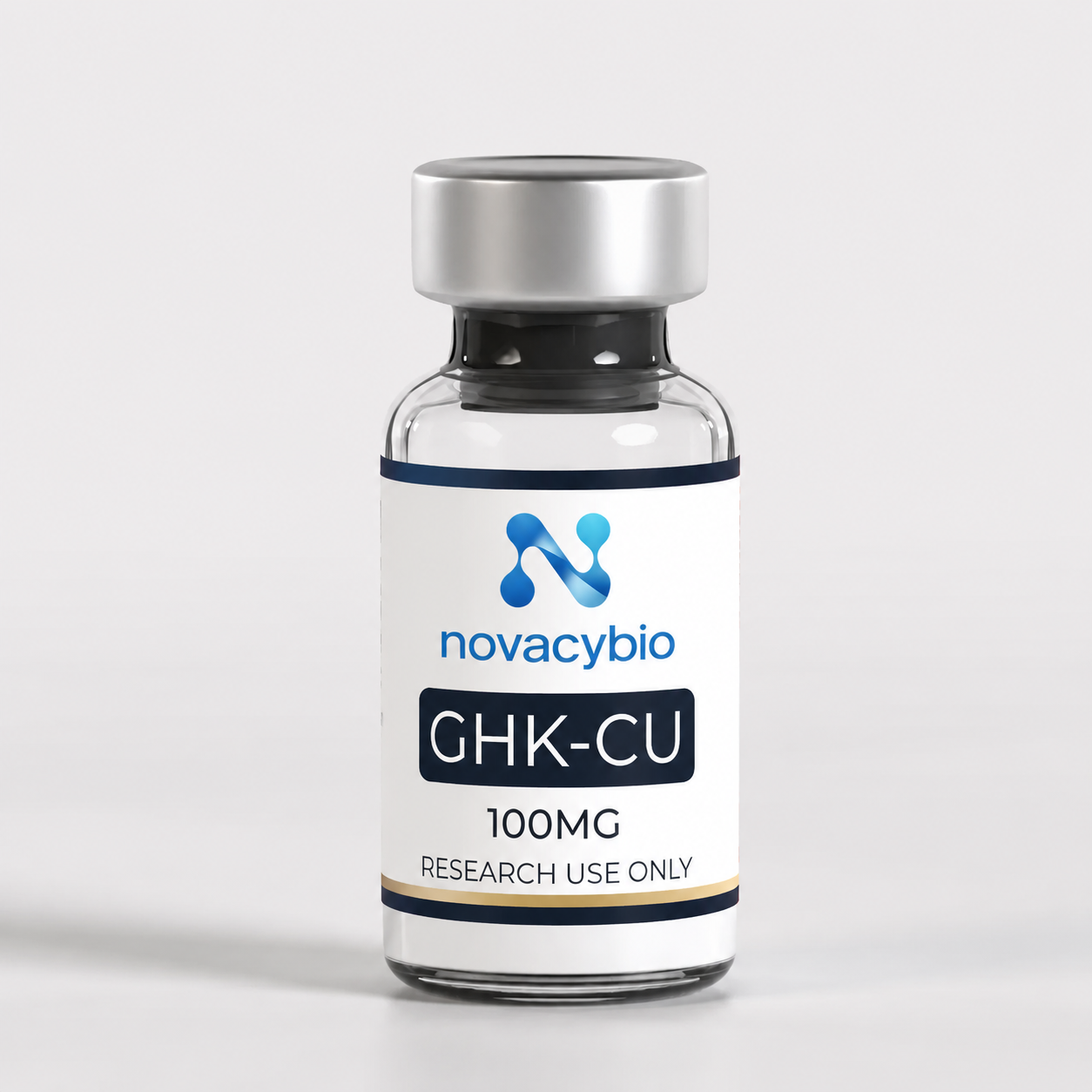
GHK-Cu
High Purity GHK-Cu Copper Peptide | Laboratory Research Use Only | Lyophilized Powder
| Product Feature | Description |
|---|---|
| ✓ Research Grade Peptide Material | Synthetic copper peptide designed for laboratory research applications, including biochemical and molecular studies. |
| ✓ High Purity Peptide Standard | Manufactured under controlled processes with high-purity specifications to support consistent research workflows. |
| ✓ HPLC Verified Quality | Each batch undergoes HPLC testing to verify peptide purity and maintain quality consistency. |
| ✓ COA Documentation Available | Certificate of Analysis (COA) provided with purity results, product identification, and quality verification data. |
| ✓ Professional Manufacturing & Quality Control | Produced through controlled synthetic peptide manufacturing processes with quality checks for batch reliability. |
| ✓ Secure Packaging & Storage Protection | Supplied in sealed research-grade packaging to protect product integrity during storage and transportation. |
| ✓ Laboratory Research Use Only | For qualified laboratory research, analytical testing, peptide chemistry studies, and scientific investigation only. Not for human consumption or clinical use. |
| ✓ Package Size | 1 Kit (10 Vials) |

GHK-Cu Research Peptide | Synthetic Copper Peptide for Laboratory Research
1. Product Introduction
GHK-Cu Research Peptide is a synthetic copper-binding peptide complex widely studied in biochemical and molecular research. Also known as Copper Tripeptide-1, GHK-Cu consists of the naturally occurring tripeptide sequence Gly-His-Lys (GHK) combined with a copper ion (Cu²⁺).
As a Synthetic Peptide used in Laboratory Research, GHK-Cu has attracted scientific interest due to its unique peptide structure, copper-binding characteristics, and role in experimental studies involving cellular pathways, extracellular matrix components, and molecular signaling mechanisms.
GHK-Cu research materials are commonly utilized by laboratories investigating peptide chemistry, protein interactions, copper-dependent biological processes, and cellular response pathways.
This Research Peptide is supplied exclusively for controlled laboratory applications, including analytical testing, biochemical investigation, and academic research.
2. Quality Highlights
Our GHK-Cu peptide is manufactured and tested according to research-grade quality standards.
✓ High Purity
Produced using controlled peptide synthesis processes with high-purity specifications.
✓ HPLC Testing
Each batch undergoes analytical verification using High-Performance Liquid Chromatography (HPLC).
✓ COA Available
Certificate of Analysis (COA) documentation is available for batch-specific quality verification.
✓ Research Grade
Designed for laboratory research applications requiring reliable peptide material.
✓ Quality Verification
Each production batch is evaluated through analytical testing procedures to confirm identity, purity, and consistency.
3. Technical Overview
Molecular Characteristics
GHK-Cu is a copper peptide complex formed between the tripeptide Glycyl-L-Histidyl-L-Lysine (GHK) and copper ions.
The peptide belongs to the class of synthetic bioactive peptides studied for its copper-binding properties and molecular interactions.
Key characteristics include:
- Short-chain tripeptide structure
- Copper ion coordination capability
- Defined amino acid sequence
- Stable peptide-copper complex formation
- Compatibility with biochemical research workflows
Peptide Structure
GHK-Cu contains three amino acids:
- Glycine (Gly)
- Histidine (His)
- Lysine (Lys)
The histidine residue contributes to copper coordination, forming a peptide-metal complex commonly investigated in molecular and biochemical studies.
Research Background
GHK-Cu has been examined in scientific literature for decades as a model copper peptide system.
Current laboratory research areas include:
- Peptide-metal interactions
- Copper transport mechanisms
- Extracellular matrix-related studies
- Cellular signaling investigations
- Molecular biology research
GHK-Cu provides researchers with a standardized peptide compound for studying copper-associated biochemical processes.
4. Product Specifications
| Specification | Details |
|---|---|
| Product Name | GHK-Cu |
| Category | Research Peptide |
| Type | Synthetic Copper Peptide |
| Purity | ≥99% (HPLC Tested) |
| CAS Number | 89030-95-5 |
| Molecular Weight | 401.92 g/mol |
| Molecular Formula | C14H24CuN6O4 |
| Appearance | Blue Lyophilized Powder |
| Form | Freeze-Dried Peptide Powder |
| Sequence | Gly-His-Lys-Cu |
| Storage | Store in a cool, dry environment; protect from light |
Specifications may vary slightly depending on analytical testing methods and production batches.
5. Research Applications
Cellular Research
GHK-Cu is frequently studied in laboratory environments investigating:
- Cellular signaling pathways
- Peptide-cell interaction models
- Protein expression research
- Cell culture research systems
Researchers use GHK-Cu as a reference compound for exploring peptide-mediated cellular responses.
Molecular Biology Research
GHK-Cu is utilized in molecular biology studies involving:
- Gene expression analysis
- Molecular pathway investigation
- Peptide-protein interaction studies
- Cellular communication mechanisms
It serves as a research tool for evaluating molecular responses under controlled experimental conditions.
Copper Binding and Metal Complex Research
Due to its copper coordination properties, GHK-Cu is studied in:
- Peptide-metal chemistry
- Copper-binding mechanism research
- Metalloprotein-related investigations
- Biochemical interaction studies
Extracellular Matrix Research
Laboratory studies frequently investigate GHK-Cu within research models related to:
- Collagen-associated molecular pathways
- Extracellular matrix components
- Structural protein research
- Tissue biology research models
Analytical and Biochemical Research
GHK-Cu can be used as a reference material for:
- Analytical chemistry studies
- Peptide characterization
- Mass spectrometry research
- Chromatographic analysis
6. Quality Documentation
Certificate of Analysis (COA)
Each batch of GHK-Cu Research Peptide can be accompanied by analytical documentation including:
- Product identification
- Batch number
- Purity testing results
- Analytical specifications
- Quality assessment data
HPLC Analysis
High-Performance Liquid Chromatography (HPLC) testing is used to evaluate peptide purity and batch consistency.
HPLC documentation supports:
- Purity verification
- Quality monitoring
- Research reproducibility
Batch Testing Documentation
Quality control procedures may include:
- Appearance inspection
- Identity confirmation
- Purity analysis
- Manufacturing batch records
Documentation availability helps research institutions maintain accurate laboratory records.
7. Storage Information
For optimal stability and laboratory handling:
- Store in a cool and dry environment
- Protect from direct light exposure
- Minimize moisture exposure
- Keep sealed when not in use
- Follow laboratory peptide storage protocols
Recommended storage conditions:
Short-term storage: Refrigerated conditions
Long-term storage: Frozen storage according to laboratory requirements
Always follow institutional handling procedures for research materials.
8. Research Disclaimer
For research use only.
GHK-Cu Research Peptide is intended exclusively for laboratory research applications.
Not intended for human consumption.
Not intended for clinical or diagnostic use.
Not intended for use as a food, drug, cosmetic ingredient, or therapeutic product.
This product is supplied for qualified researchers, laboratories, and institutions conducting controlled scientific studies.
9. FAQ
What is GHK-Cu?
GHK-Cu is a synthetic copper peptide complex consisting of the tripeptide Gly-His-Lys combined with copper ions. It is commonly used as a research compound in peptide and molecular biology studies.
Is GHK-Cu a Research Peptide?
Yes. GHK-Cu is classified as a research peptide used in laboratory investigations involving peptide chemistry, copper-binding studies, and molecular research applications.
What purity is available for GHK-Cu?
GHK-Cu is typically supplied as a high-purity research peptide with HPLC analytical testing performed for quality verification.
Is a COA available for GHK-Cu?
Yes. Certificate of Analysis documentation may be provided to verify batch information, analytical testing results, and product specifications.
How should GHK-Cu peptide be stored?
GHK-Cu should be stored under controlled laboratory conditions, protected from moisture, excessive heat, and direct light exposure.
What research applications use GHK-Cu?
GHK-Cu is commonly studied in peptide chemistry, cellular research, molecular biology, copper-binding research, and analytical testing applications.
Is GHK-Cu approved for clinical applications?
GHK-Cu sold as a research peptide is intended only for laboratory research purposes and is not supplied for clinical or diagnostic applications.

You have successfully commented, please wait for review
Copied Successfully
You can enjoy up to 1 free gift!
